
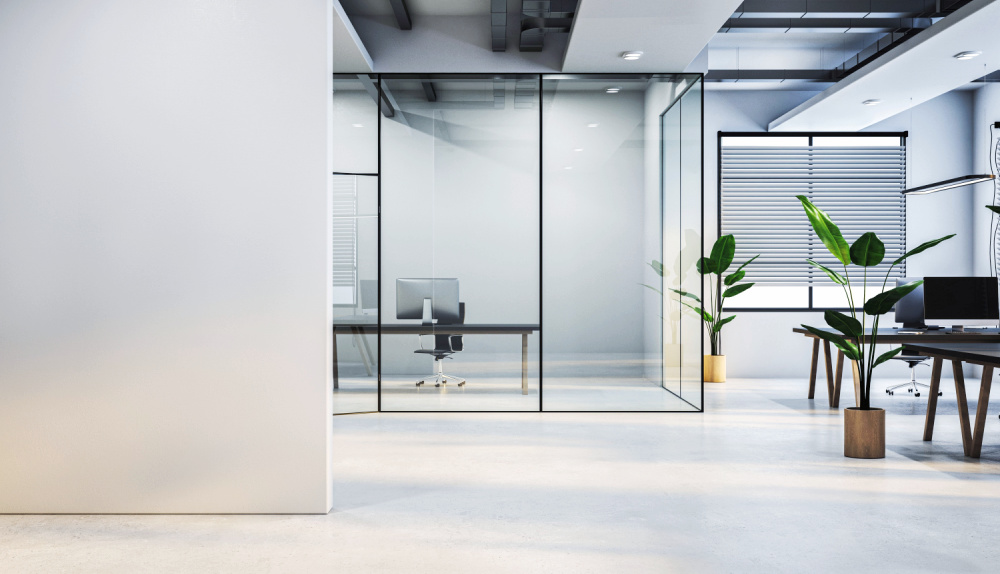
The modern office aesthetic is dominated by open-plan design, celebrated for its promotion of collaboration, natural light, and a sense of egalitarianism. However, this shift toward transparency has inadvertently created a new set of challenges, with noise being the most persistent. Unwanted noise—from phone calls and keyboard clicking to impromptu meetings—is a major source of distraction, proven to reduce concentration, increase stress, and decrease productivity. As businesses seek solutions that maintain the desired visual openness while tackling the acoustic problem, acoustic glass office partitions with sliding doors have emerged as a sophisticated compromise. The question many facility managers and business owners ask is simple: Do these transparent barriers truly reduce noise effectively?
The short answer is yes, but their effectiveness is entirely dependent on the quality of the materials, the precision of the installation, and the specific engineering of the sliding door system. These Glass Office Partitions in Los Angeles – Office Room Dividers with Doors – KNR Sliding Doors leverage advanced material science to achieve sound reduction, a principle that goes far beyond a simple sheet of glass. Understanding the core components of these acoustic systems is key to appreciating their role in creating a balanced, productive modern workspace.
The Science of Sound Reduction: STC Ratings
To understand how acoustic glass works; one must first grasp the concept of the Sound Transmission Class (STC) rating. The STC rating is a single-number measure used to quantify a material’s or assembly’s ability to resist the passage of sound. Essentially, it indicates how well a building element reduces airborne sound.
For context, a standard interior gypsum wall might have an STC rating of 35-40, which effectively muffles normal speech. Normal office speech is often reduced to whispers at STC 40-45. High-performance acoustic glass partition systems are engineered to achieve STC ratings typically ranging from 35 to 48, depending on the thickness and configuration of the glass. This level of attenuation is sufficient to transform a noisy collaborative area into a quiet private meeting room or office space, successfully mitigating disruptive background chatter.
The Glass Component: Laminated and Double-Glazed
The effectiveness of the glass itself lies in two primary methods of construction: laminated glass and double-glazed (or insulated) units.
Standard single-pane glass is poor at blocking low-frequency sounds. When sound waves hit it, the pane vibrates like a drum skin, easily transmitting the noise. Acoustic performance is dramatically improved through lamination. Laminated glass uses two or more panes of glass bonded together by a specialized, acoustically dampening interlayer, often made of Polyvinyl Butyral (PVB). This interlayer acts as a shock absorber, dissipating the sound wave energy and preventing the two sheets of glass from vibrating at the same frequency. This construction is highly effective at blocking a broad range of frequencies, achieving impressive STC ratings with a relatively thin profile.
Even higher STC ratings are achieved with double-glazed units (DGU). These systems use two separate panes of glass, often laminated, separated by an air or gas-filled space. The key is the distance between the panes. The air gap acts as a secondary buffer, forcing the sound waves to travel through two separate dampening layers. Crucially, the internal faces of the glass panes are often different thicknesses to prevent coincidence dips—where both panes vibrate in resonance at the same frequency—thereby ensuring superior sound blocking across the acoustic spectrum. These sealing features are what transform a standard, acoustically weak sliding door into an effective component of a high-performance acoustic barrier.
Conclusion: A Successful Synthesis of Form and Function
Acoustic glass office partitions with sliding doors are a successful synthesis of modern architectural form and essential acoustic function. They are not merely stylish dividers but sophisticated sound-dampening systems. By leveraging laminated or double-glazed glass for superior sound absorption and employing specialized sealing mechanisms in the sliding doors, these partitions can achieve the high STC ratings required to foster quiet, productive work zones within a visually open plan. The key for any business seeking this solution is to prioritize quality: look for high STC ratings, verify the use of proper sealing hardware, and ensure installation is executed by specialists. When properly chosen and installed, these transparent barriers are an invaluable investment in employee well-being and office productivity.




More Stories
5 Hidden Home Improvement Hacks That Save You 100s (Without Breaking the Bank)
5 Genius Bathroom Upgrades That Transform Your Space in a Weekend
5 Smart Home Upgrades That Boost Value Without Breaking the Bank